
Speakers

Nina Van Herck
Nina Van Herck is a conceptual product designer who creates physical interventions that challenge social boundaries. Instead of standard consumer goods, Nina's work focuses on the tangible relationship between spaces, taboos, and the lived experiences of marginalized or non-normative bodies and minds. Deeply informed by the vibrant style and energy of collaborative gatherings, Nina designs open-ended tools that require active participation. Whether creating wearable designs that empower the individual or developing systems that open up safer spaces for the community, Nina's goal remains the same: creating tactile tools that allow people to connect, express themselves, and reclaim autonomy together.

Dr Gabor Petri
Gábor is a researcher at the CEU Democracy Institute in Budapest. He has worked in the
disability field since 1999, when he started working as a support worker for people with multiple disabilities. Since then, he has held various positions in disability rights organisations in Hungary and at the European level in Brussels. Gábor received his PhD from the Tizard Centre, University of Kent in 2019, where he explored the position of self-advocates in the learning disability and autism advocacy movement. His current research examines how democratic backsliding affects disability rights. Gabor also works with independent living and autistic grassroots groups in Budapest. His research interests include disability policies, the disabled people’s movement, disability rights, and community-based services.
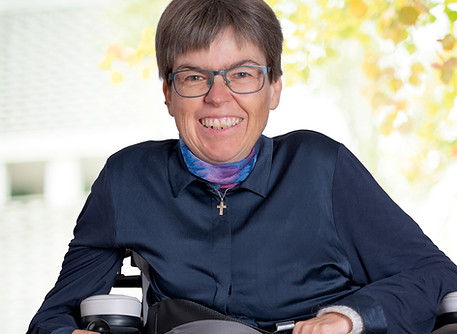
Simone Leuenberger
Simone Leuenberger is a Swiss disability rights activist, teacher, and politician who has been living with personal assistance for more than 30 years. She works for Agile (www.agile.ch), the umbrella organisation of Swiss organisations of people with disabilities, co-founded InVIEdual (www.inviedual.ch), a self-advocacy organisation of people with disabilities fighting for personal assistance, and is active in the Independent Living movement.
She was closely involved in the introduction of the Swiss personal assistance model in 2012 and has since worked on its implementation and further development at both national and cantonal level. Her work focuses on the practical and political conditions needed for people with disabilities to employ assistants, organise support independently, and live outside institutions. Alongside her policy and advocacy work, she brings many years of personal experience as a PA user and employer.

Dr Miro Griffiths
Dr Miro Griffiths is a Disability Studies scholar based at the University of Leeds, UK. He is also the current Director of the Centre for Disability Studies, which is an interdisciplinary research network based at the University. His research areas include disability activism, social movement mobilisations, and resistance practices, as well as how disabled people imagine and articulate visions for accessible and inclusive societies. Alongside academia, Miro is a disability policy adviser to government departments, civil society organisations, and private enterprises. He is a former strategic and confidential adviser to the UK government, and previous advisory roles included the British Council and the UK Equality and Human Rights Commission. He is a founding member of the ENIL Youth Network.

Dr Teodor Mladenov
Teodor Mladenov is an academic working at the University of Dundee, UK. Previously, he was Marie Curie Individual Fellow at the European Network on
Independent Living (2017-2019), and Leverhulme Early Career Fellow at the Centre for Public Policy Research, King’s College London (2013-2016). Teodor has expertise in disability studies and activism, international social policy, postsocialism, and critical theory. He is author of Critical Theory and Independent Living (2024, Manchester University Press), Disability and Postsocialism (2018,
Routledge), and Critical Theory and Disability: A Phenomenological Approach (2015, Bloomsbury). Since 2018, Teodor has been coordinating the
Independent Living Research Network, a research collaboration hosted by the European Network on Independent Living. In the period 2000-2009, he was actively involved in campaigning for disability rights in Bulgaria, working closely with the Centre for Independent Living – Sofia.

Martine Eliasson
Martine Eliasson is a disability rights activist from Norway. She works as a political adviser at Uloba – Independent Living Norway and is a Board member of ENIL.
She has a master’s degree in disability studies and has many years of experience in youth activism and political work. Martine works to strengthen disabled people’s rights, including the right to personal assistance and independent living. She is passionate about equality, self-determination, and an inclusive society where everyone can live freely and take part in the community.

Kamil Goungor
Kamil is originally from Poland, but was born and lives in Greece, where he studied journalism and communication. In 2014, he co-founded i-living, the first and only Independent Living organisation in Greece. Since 2018, he works for ENIL as Policy and Movement Support Officer, and, among other things, his role is to work on membership, and on areas like personal assistance, inclusive education, disability and climate change/hate crime & hate speech/AI & technology, and represents the organisation in conferences and other events, being an experienced speaker. Also, until autumn of 2022 he represented the ENIL Youth Network at the Youth Committee of the European Disability Forum, being the chair of the latter, and he was also in the Youth Committee of the International Disability Alliance. Finally, he is the only disabled travel blogger in Greece (check @thetrawheeler) and is part of the team of Care Under Sun, an accessible tourism company in the country.

Josse Cornette
Josse Cornette - Josefien (°1994, Belgium) is a multidisciplinary artist, researcher, and educator. They studied visual arts (Mixed Media) at LUCA School of Arts in Ghent and art history and gender and diversity studies at Ghent University.
Josse identifies as a disabled maker. Born with the rare congenital disability Fibular Hemimelia, their practice is deeply shaped by embodied experience and artistic research. They shape their world, art and work according to their sensitivity.
Their practice can be understood as a poetic and critical exploration of care, vulnerability, and interdependence. Their work develops hybrid methodologies that move between artistic and academic fields, experimenting with forms of researching, archiving, writing, and storytelling. Their practice engages with critical disability studies, trauma studies, death studies, crip theory, and queer theory.
Alongside their artistic practice, Josse regularly teaches, mentors, and guides artists, writers, and students in developing practices that engage with disability narratives and accessibility. They are currently affiliated with the Research Center for Open Arts and Futures at Erasmushogeschool Brussel.
Josse frequently participates in public debates, guest lectures, and workshops. They serve on the board of Sophia, the Belgian Network for Gender Studies, and the Disability Filmfestival.
Their work has been described as both sharp, caring, rebellious and poetic. They received the DiverGent Thesis Prize (2020)for their manuscript A House Called Pain and were awarded at the Tallinn Drawing Triennial (2015).

Jamie Bolling
Jamie Bolling living in the north of Sweden is the chari of the Independent Living Institute located in Stockholm Sweden. She is the co-chair of ENIL – the European Network on Independent Living and was the director of ENIL from 1997 – 2017. She was a member of the European Fundamental Rights Platform’s Advisory Panel from 2010 - 2014. Jamie is on the board of UNICEF Sweden and is the president of MyRight the Swedish disability organisation for international development cooperation. Jamie has a Masters degree in social anthropology and work experience in disability research, international development cooperation, personal assistance as well as other areas concerning disability issues and Independent Living . Combining her experience in politics and from different appointments at local, regional, national and EU level, with her vast knowledge of the international disability movement Jamie works for progress in Independent Living issues and policy.

Dr Carmen Yau
Dr Carmen Yau is a disability researcher, educator, and advocate whose work explores disability justice and intersectionality. Carmen’s work critically examines the politics of disabled bodies, intimacy, and desire, with a particular focus on disabled women facing intersecting forms of oppression, fetishisation, exclusion, and violence. Carmen is a lecturer in social work and the Lead of the Wellbeing Research Unit at Goldsmiths, University of London, where she develops interdisciplinary and community-engaged research on wellbeing, social justice, and inclusive practice.
Alongside their academic work, Carmen is a prolific and trailblazing erotica writer who is the first author to coin the term "Crip Slut" in Asian literature that unapologetically centres disabled bodies in erotic storytelling. Carmen is a multi-award winner - Disability Power 100 (2024), Shortlisted in the Sexual Freedom Award in UK (2024), UN Women’s Rise and Raise Other Award nominee (2021), Tatler’s Hot List of “Sixteen Women Fighting for Fairness in Asia” (2020). Her work includes disability-affirmative sex education, restorative justice in domestic and sexual violence, sex volunteering services, “crip” experience in kink and fetish, and radical professional practices. She has inspired a new wave of "Crip Slut" that all bodies are celebrated, all pleasures are valid, and no one is left in the margins of desire.

Antonella Candiago
Antonella Candiago (she/her) is a disability rights advocate, policy professional, and researcher working at the intersection of disability, gender, sexuality, and social justice. Drawing on both professional expertise and lived experience as a disabled woman, she is committed to advancing the rights, autonomy, and self-determination of disabled people.
Antonella currently works at the European Network on Independent Living (ENIL), where she contributes to policy and advocacy efforts promoting independent living, human rights, and disability inclusion across Europe. Her work focuses on a range of issues, including political participation, gender equality, accessibility, disability justice, and the implementation of the United Nations Convention on the Rights of Persons with Disabilities.
She has developed particular expertise in disabled sexuality and intimacy, sexual and reproductive health and rights (SRHR), comprehensive sexuality education, and the ways ableism shapes societal understandings of bodies, relationships, desire, and care. Through her advocacy, research, and public engagement, she works to challenge stigma and promote more inclusive, intersectional approaches to sexuality, disability, and human rights.

Maria Jose Aldanas
María Aldanas is a Policy Officer at FEANTSA. Since 2016, she has led work on homelessness and housing rights, coordinating the Housing Rights Watch network. This multidisciplinary network brings together NGOs, academics, lawyers, and others to promote access to housing rights for people experiencing homelessness, support strategic litigation, and combat the criminalisation of homelessness.
She is responsible for FEANTSA’s work on the use of the European Social Charter and the collective complaints procedure to challenge housing rights violations across Europe, contributing to key cases that advance legal standards on homelessness and access to housing.
María studied law at the Complutense University of Madrid and holds a Master’s degree in Migration and Intercultural Relations.
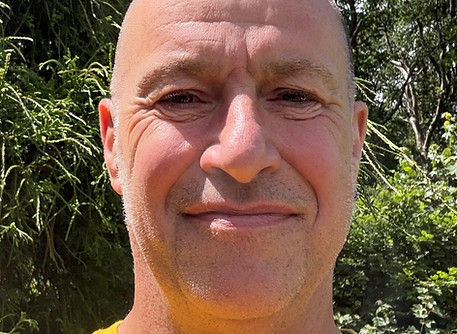
Nic Crosby
Nic is a long-term supporter of the Freedom Drive and active advocate for the complete closure of institutions. In the UK Nic leads work for NDTi to develop new community-based person centred small organisations who support people with intellectual disabilities and/or autism to live in the community. Many of the people Nic works alongside are currently in-patients in mental health institutions; moving out means having really good and very person-centred support in the community.
Nic supports work led by IRSSV in Slovenia who are taking forward a 10-year deinstitutionalisation programme and links with many others around the world who are all committed to the complete closure of institutions. Nic is always keen to link with people where ever they are who are similarly committed to closing institutions and championing people’s human rights.
In his spare time Nic does a lot of woodturning, gardening, and climbing. His two sons are grown up and heading off on their own journeys. Nic is married and lives up on the southern slopes of Dartmoor in south west England.
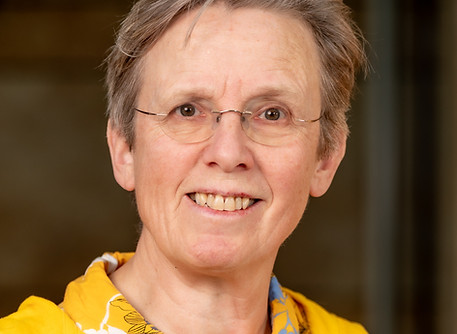
Jose Smits
Jose Smits, a former journalist focusing on socio-economics and political issues, works as politician and policy analyst. She writes evaluation reports on national and international disability policies.
She is also a longtime inclusion activist. While fighting for access for her own child with disabilities to regular child support, mainstream schools and leisure time activities, she has always realized the importance of organizing larger groups of activists and thus helped organize other parents with children with disabilities.
She is the founder of Inclusion Netherlands and has been involved in a new national (Dutch) initiative to promote independent living via the foundation Gewoon Leven (ordinary life).
_edited.jpg)
Stefan Moser
Stefan Moser was born in Munich in 1971 and trained as an economist and a lawyer. He joined the Commission in 2000 in DG Competition to work on control of state aid to public undertakings and services, notably financial institutions. From 2005 to 2009, he worked in DG Environment on climate and environment policy, notably greenhouse gas emissions trading, transport emissions and air quality. From 2009 to 2015, he dealt with policy coordination in the Secretariat-General, in particular on climate, energy, environment, transport, agriculture and maritime policies. From 2015 onwards, he has served as head of unit in DG Energy, first on energy security and safety, and then on energy efficiency of buildings and products and now on the Task Force Housing.

Steven Allen
Steven is a social justice activist and was appointed Executive Director of the Validity Foundation in 2022, having previously served as Co-Executive Director (2018-2022), and originally joining the team in 2013. Steven holds a law degree from the University of London and has a postgraduate research interest in legal institutions that deny autonomy of marginalised populations. Steven's interest in access to justice comes from his experience of supporting his mother with a psychosocial disability who died whilst detained in a closed British psychiatric hospital. The litigation that followed established the presumption that deaths in mental health institutions must be investigated in the same way as other deaths in detention, triggering expanded inquests in compliance with Article 2 of the European Convention on Human Rights.

Markus Scheffer
Markus Scheffer is a member of the UN Committee on the Rights of Persons with Disabilities and acted as the Rapporteur for the combined second and third review of the European Union. He is a Professor of Constitutional and Administrative Law at the University of Basel in Switzerland. See: https://www.markusschefer.ch/

Antonia Trikalioti
Antonia Trikalioti is a Greek disabled activist, a co-founder of the Independent Living Organisation of Greece “i-living” and an ENIL Board member. She is an economist and a software engineer. She has been a scientific assistant of a Member of the European Parliament during the last term of office. She has been a member of the working group for legislating personal assistance of the Greek Ministry of Labor and Social Affairs. She has represented“i-living” during the consultations for the Greek Strategic plan on Deinstitutionalisation. She was the scientific supervisor of the working group of the Administrative Region of Thessaly drafting the strategy on the rights of disabled persons, a member of the equivalent working group of the Administrative Region of West Macedonia, as well as the member specialised in Independent Living of the permanent committee of disabled women of the Administrative Region of Attica. She participates in music theatre and her first science fiction novel was published this year.

Katrin Langensiepen MEP
Katrin Langensiepen is a German politician of the Alliance 90/The Greens who has been serving as a Member of the European Parliament since 2019. Katrin Langensiepen is the first female MEP with a visible disability. Source: Wikipedia and European Parliament website

Ingrid Thunem
Ingrid Thunem (they/them), is a member of the ENIL Board, as well as the President of the Norwegian Association of Youth with Disabilities (NAYD). NAYD is a umbrella organization, representing 38 organizations for youths and young adults with disabilities or chronic diseases, and works toward a universally designed society with full participation for disabled and chronic ill young adults. Ingrid is also the chair person of Queer disabled Norway a organization for queer disabled people all over Norway. The organization works towards inclusive disability policy and to arrange social gatherings for queer disabled people. Beyond being a passionate advocate for the human rights of disabled people, Ingrid has dedicating substantial efforts to building an inclusive queer community. Ingrid strives to ensure that every voice within this diverse spectrum is recognized and valued. Their home, perched above the Arctic Circle, provides them with a unique perspective on life and an abiding love for the simple pleasures, like savoring a cup of tea. They love having a bonfire and find the artic way of life very inspiring. Currently, Ingrid is immersed in academia, pursuing a PhD in the intricate intersection of sexuality and disability.

Ulrika Norelius
Ulrika Norelius is the Executive Director of STIL (the Founders of Independent Living in Sweden). She took on the role in 2026 after a long career within the disability rights movement, most recently serving as Chief Executive Officer and previously as Head of Individual Support at the Swedish Association of the Visually Impaired (SRF).Ulrika has extensive experience in both strategic and operational leadership, with responsibility for organizational development, finance, human resources, and quality management. She has a strong commitment to human rights, self-determination, and an inclusive society where everyone can live on equal terms. As Executive Director of STIL, Ulrika works to strengthen the right to personal assistance and independent living.

Florian Sanden
Florian Sanden is Policy Coordinator at ENIL. It is his job to communicate our political objectives to decision-makers. Being disabled himself, he has first handed experience with the many barriers disabled people face. He is dreaming of he future where he can get the support he needs. At ENIL he led lobby campaigns on the European Care Strategy, the European Commision Guidance on Independent Living and the Regulation on the Protection of Vulnerable Adults. In his free time Florian provides peer support to neurodivergent people at the self-help organisation Neurodiversity Belgium. In addition, he is advisor to the board at Interessenvertretung Selbstbestimmt Leben, the largest Independent Living Organisation in Germany.

Catarina Vitorino
Catarina Vitorino is a researcher at the University of Coimbra, Portugal. She holds a PhD in Clinical and Health Psychology. Her research interests lie at the intersection of disability studies, mental health, and gender studies, with a particular focus on independent living, personal assistance, and sexuality. She is a disabled woman and defines herself as an anti-ableist, feminist, and intersectional activist. She is the co-chair of the ENIL Youth Board, a member of the Board of Center for Independent Living in Portugal, and co-founder of a Portuguese feminist collective of disabled women, As DEsaFiantes.

Jesper Mathiesen
Jesper Mathiesen is a Danish social worker, lecturer, and disability advocate based in Copenhagen. He works as a Membership Consultant at LOBPA (National Association for Citizen-Controlled Personal Assistance), where he advises people with disabilities on independent living, personal assistance, social legislation, and assistive technology.
In addition to his professional role, Jesper serves on the board of the Copenhagen branch of the Danish Disability Association, where he contributes to local disability policy and advocacy. He is also an elected member of the Østerbro Local Committee in Copenhagen, helping shape local initiatives and promote accessibility, inclusion, and active citizenship within the community. Furthermore, he volunteers as a social worker with Rare Disorders Denmark, providing guidance on social rights and support schemesfor people living with rare diseases.
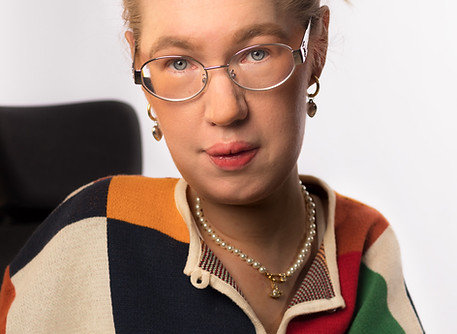
Emma Astrand
Emma Åstrand is a Project Manager and Coordinator of International Contacts at STIL (The Founders of Independent Living in Sweden). She works to strengthen the independent living movement through international collaboration, advocacy, education, and knowledge-sharing.Emma has a particular focus on independent living and crip theory, and works for accessibility and cross-disability solidarity, ensuring that disabled people are represented in all decisions concerning their lives. From 2026, Emma works as the Project Manager of creating a CIL in Sweden. Drawing from both professional and personal experiences, Emma is passionate about fostering a society where all citizens have equal opportunities to live and actively participate in all aspects of life, regardless of functionality.

Ashraf Fruhg
Ashraf is an Afghan‑born human rights advocate, writer, and disability‑rights activist whose life has been shaped by both hardship and determination. Born in 1988 in Wardak province of Afghanistan, he was permanently injured during the Afghan civil wars at the age of nine—an event that profoundly influenced his commitment to justice, dignity, and equal rights for people with disabilities.
He worked with the International Committee of the Red Cross in Afghanistan for fifteen years. When the Taliban regained power in 2021, Ashraf was evacuated to Sweden with support from the Swedish government. Determined to continue his mission in a new country, he joined the Independent Living Institute in early 2024.
Ashraf is also a published author with five books, using literature as a tool for empowerment, cultural memory, and social change.
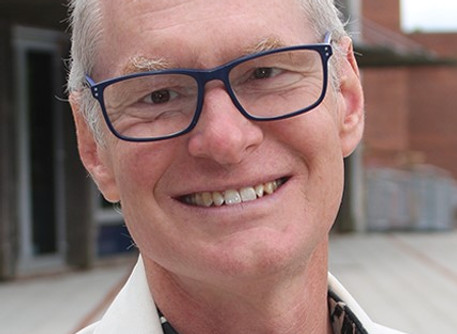
Emil Erdtman
Emil Erdtman is the Director of the Independent Living Institute in Stockholm. He earned a PhD from Lund University in 2024, with a thesis about Universal Design in Practice. Before joining ILI in 2016, he worked many years at the Swedish Disability Rights Federation. Further, Emil has an art studio, writes poetry, and is involved in blind fencing. He is disabled from birth.

Nicolas Joncour
Nicolas is an AAC user, non-speaking autistic, from France and he is studying for a master degree in sociology at the University Rennes 2. He wants to specialise in disability studies . He is 26, and he needs full-time assistance. For several years, Nicolas has been an activist for the right to independent living. He is a member of ENIL Youth board and he is also a member of the French association Clé Autistes. Nicolas has participated in several conferences on the topics of legal capacity, deinstitutionalisation and AAC.

Rúnar Björn Herrera Þorkelsson
Rúnar Björn Herrera Þorkelsson is the Chairman of NPA center, a user-led cooperative working for Personal Assistance and Independent Living in Iceland. He has been active in the Icelandic disability rights movement and has taken part in advocacy, policy discussions and consultation with public authorities at both municipal and national level. His work focuses on ensuring that Personal Assistance is understood as a human rights issue, not as care or charity, and that disabled people have real control over their assistance, daily lives and decisions. At the Freedom Drive, he will share experiences from Iceland, including both progress made and ongoing challenges.

Aneta Genova
Aneta Genova (Mircheva) is a Bulgarian human rights lawyer, researcher and co-founder of the Independent Expert Network – NIE and Kera Foundation. Her work focuses on the rights of persons with disabilities, particularly independent living, legal capacity, access to justice, protection from institutionalisation and coercion, and the prevention of inhuman or degrading treatment.
Aneta develops and supports strategic litigation aimed not only at securing remedies in individual cases, but also at exposing structural violations and advancing broader legal and policy reform. Her approach combines litigation, field research, monitoring, advocacy and direct engagement with persons affected by human rights violations.
She has worked in cooperation with national and international human rights organisations and is committed to ensuring that the voices, will and lived experience of persons with disabilities remain central to legal strategies and social change.

Ash Delsael
Ash Delsael (they/them) is a non-binary person from Belgium. They are visually impaired: they have vision in one eye, while the other is almost completely blind. By sharing their experiences, they aim to contribute to conversations about disability, accessibility, inclusion, and mental health. In their free time, they can usually be found listening to music, playing the guitar, exploring podcasts, reading, writing, or discovering new ideas. Ash is passionate about learning from others and creating spaces where open and honest conversations can happen.

Sophia Kleanthous
Sophia Kleanthous is a campaigner in the disabled people's movement in the UK and holds multiple roles. She has led and co-led policy campaigns on accessibility, accessible transport, access to health and education, assisted dying, housing, hate crime, mental health, social security, and more. She is one of the founding members of the new Care in Crisis coalition, calling for investment into palliative, end-of-life care and an end to non-consensual "do not attempt resuscitations" (DNAR). She has worked on influencing WHO and EU policy with stakeholders from disabled people to government ministers, both nationally and internationally. She has been one of the campaigners in the disabled people's movement fighting against the Assisted Dying Bill in the UK and calling for better care for all. She is also a singer/songwriter and writer. She writes about her lived experiences as a disabled person and campaigner.

Michelle Daley
Michelle Daley is the Director of the Alliance for Inclusive Education (ALLFIE), the UK’s only Disabled People’s Organisation dedicated to Inclusive Education. She leads national work that challenges educational segregation by disrupting ableist and discriminatory systems, shaping national policy, and centring lived experience across consultations, research, and resources to hold government and public bodies to their legal duties under equality law and Article 24 of the UNCRPD. Her leadership is grounded in rights-based principles and intersectionality, making clear that our identities and lived experiences are inseparable.
Michelle's life and her experience of school segregation shapes her commitment to intersectional justice. Audre Lorde’s words that “we do not live single issue lives” guides her leadership and ALLFIE’s work. Michelle holds that liberation is collective, built through cross movement solidarity, and that Disabled people must lead decisions that shape our lives, guided by “Nothing About Us Without Us” and the demand for Inclusive Education for everyone.

Peter Kearns
Peter Kearns BA, MA, H. Dip., is a disability rights activist, educator, and artist based in Ireland. Since joining Independent Living Movement Ireland (ILMI) in 2019, he has worked on social inclusion and currently serves as DPO Development Officer and Activist-Mentor, supporting the growth of Disabled Persons’ Organisations across the country. With academic backgrounds in English, Film & TV Studies, and Adult & Community Education, Peter also lectures and develops higher education modules focused on emancipatory and advocacy-based approaches to disability. He has extensive experience in policy and international work, including contributing to NGO input for the UN Convention on the Rights of Persons with Disabilities. Peter founded The Workhouse, a disability consultancy active across Ireland, Europe, and Asia, and has played a key role in disability arts. His work includes collaborations with the Abbey Theatre, developing access policies, and producing award-recognised theatre such as No Magic Pill. Alongside his advocacy and creative work, he develops nationwide self-advocacy programs and works as a writer, dramatist, and filmmaker.
%20CHRYSSIKOS_edited.jpg)
Grigoris Chryssikos
Grigoris (Greg) Chryssikos has studied Economics at Athens University of Economics and Business and is the co-founder of the NGO/social media accounts Cool Crips. He is a quadriplegic after an accident in 2017 at the age of 22 and has since then been active in the field of disability. He has participated in the documentary As Far As The Sea (Marco Gastine, 2019) about rehabilitation. He is also an active Para Table Tennis athlete and Greek Champion in Class 1.

César Giménez
Born in Jerez de la Frontera, in the province of Cádiz, he moved -or was moved- to the capital of the Costa del Sol at six months old. He was born in April 1973. In the early 1990s, he began his undergraduate studies at the State University of New York at Buffalo. In the late 1990s, he completed his second degree at the University of Málaga. In this century, he began and finished his doctoral coursework, but was unable to continue working on or complete his dissertation due to lack of accessibility at the University of Málaga and insufficient human support. Nevertheless, he received a Master's degree in the digital realm from the National University of Distance Education, specializing in digital platforms and other related topics, before Facebook, Twitter, or any of the other social networks that are so prevalent today even existed.
He is an active member of the Independent Living Association of Andalusia and the European Network of Independent Living. He also participates in the Independent Living Forum and Divertad (a civil society group), and is involved with the SOLCOM association.
Hilde Larsen
Hilde Larsen is a Senior Travel Advisor at Freedom Express, Norway's only travel and coach company dedicated exclusively to people with disabilities. For the past 16 years, she has helped people with disabilities discover the freedom and opportunities that accessible travel can provide. Her guiding principle is: "Accessibility is much more than a ramp instead of stairs."

Pippa Black
Pippa Black BA, LLB, LLM, is a founding member of Sligo Disabled Persons’ Organisation (DPO), established in 2022, and has worked extensively on disability rights, housing, and social inclusion. She was the Social Inclusion Representative for the Sligo Public Participation Network (PPN) on the Local Council’s Strategic Policy Committee for Housing, and co-chaired the PPN Housing Thematic Network, helping produce position papers including “Removing Barriers to Housing.”
She founded the Autism Friendly Sligo Committee in 2021, represents Disabled People as vice-chair of the Sligo Community Safety Partnership, and serves on the local Disability Consultative Committee. In 2024, she took on the role of ILMI Community Development Worker for Donegal, and in 2023-2025 completed an LLM in International Disability Law and Policy.

Suvad Zahirović
Suvad Zahirović is a disability rights activist, policy advocate and Executive Director of the Information Centre for Persons with Disabilities “Lotos” in Tuzla, Bosnia and Herzegovina. For nearly three decades, he has worked to turn the principle of Independent Living into real choice, control, dignity and participation for persons with disabilities.
His advocacy has focused on changing disability policies and legislation, strengthening organisations of persons with disabilities and motivating persons with disabilities to become active advocates for their own rights. He has participated in ENIL Freedom Drive activities since 2011, promoting the message that rights are advanced when persons with disabilities organise, speak out and take an active role in shaping the decisions that affect their lives. Over the years, Zahirović had the privilege of knowing and working with many pioneers of the Independent Living movement, including Judy Heumann, Adolf Ratzka, Kalle Könkkölä, Martin Naughton and John Evans. He has consistently sought to carry their commitment, courage and motivation for activism to new generations and to as many persons with disabilities as possible.
Of particular importance has been his friendship and cooperation with Gordana Rajkov, one of the key pioneers who brought the philosophy and practice of Independent Living to the Western Balkans.
Through his work, Zahirović continues to encourage persons with disabilities to organise, participate and advocate – not only for better services and policies, but for freedom, equality and dignity.

Nuria Frei
Nuria is a lawyer who, after working at two law firms for several years, has served as a disability law specialist at the Swiss umbrella organization Inclusion Handicap since 2020. She leads the joint project “we claim” by Swiss disability organizations, which focuses on strategic litigation (www.we-claim.ch). As part of her previous work at one of the law firms, she represented Inclusion Handicap in a lawsuit against Swiss Federal Railways concerning the accessibility of the long-distance double-decker trains (FV-Dosto) for people with disabilities. Nuria holds a law degree from the University of Zurich and has become a leading expert on the rights of persons with disabilities in Switzerland, particularly with regard to the UN Convention on the Rights of Persons with Disabilities. She also serves as a disability law expert on the Disability Expert Committee of the Liechtenstein Association for Human Rights (VRM), supporting the VRM in reviewing the implementation of the UN Convention in Liechtenstein.

Franck Conrad
Franck Conrad holds a bachelor's degree in management and a master’s degree in finance. He joined the European Commission in 2011, working as a policy officer in the former DG MARKT to work on state aid to public undertakings, services of general economic interest, notably, financial institutions. From 2014 to 2017 he served as a policy coordinator in the European Commission’s secretariat general, notably on policy files related to the single market, taxation and financial services. From 2017 to 2018 he worked as a head of sector in DG TAXUD, focusing on the area of international taxation and on the EU list of non-cooperative jurisdictions. From 2019 to 2020 he served as the head of unit for the secretariat general, with a focus on strengthening the EU’s Economic and Monetary Union. From 2020 to 2023 he served as the head of unit for the recovery and resilience task force in the secretariat general, where he was responsible for the implementation of the European recovery fund. From 2023 onwards, he has served as the head of unit of DG Budget, first on Budget performance and coordination and now on the multiannual Financial Framework (MFF).

Nicolae Ștefănuță
Nicolae Ștefănuță is a Romanian politician of the Group of the Greens/European Free Alliance who has been the Vice President of the European Parliament since 2024. Prior to being appointed as president of the European Parliament, he had a long career working for the European Union institutions in various roles. From 2008 to 2011 he served as a legislative assistant to a member of the European parliament, assisting the adoption and implementation of the EU budget in Romania. From 2008 to 2011 he worked as staff member for the European Parliament’s committee on agriculture and rural development. In this role, he provided legislative and analytical support to members of the European Parliament working on policy files related to EU food quality and origin denominations, geographical indications and budget adoption, as well as contributing for the EP own-initiative report on the on reform of the Common Agricultural Policy. From 2012 to 2018 he served as an EU official responsible for transatlantic relations within the European Parliament. In this capacity, he was responsible for the European parliament relations with the United States congress and for the management of two working groups, one on trade and one on transatlantic digital economy. Currently, Nicolae Ștefănuță leverages his expertise in his capacity as the European parliament liaison officer for external relations and as European parliament Vice President.

Estelle Ceulemans
Estelle Ceulemans has been a Member of the European Parliament for the S&D group since June 2024 and serves as the group’s Coordinator for Employment and Social Affairs, acting as its lead spokesperson on these issues. She focuses on quality, well-paid jobs in future high-value sectors that address climate and digital challenges, working on restructurings (anticipating and supporting them when unavoidable), the employment dimension of the Green Deal, and psychosocial risks at work (burnout, stress, moral and sexual harassment). She also sits on the Health and Environment Committees and is a member of the delegations to the ACP-EU and Africa–EU Joint Parliamentary Assemblies. Originally from Liège, she studied labour sciences and completed a specialised postgraduate degree (DES) in personnel management at ULB in Brussels, worked as a research associate and lecturer on social security, and held roles in ministerial cabinets for Employment and Social Affairs. In 2007 she joined the Belgian General Federation of Labour (FGTB) as an advisor and later research director, before being elected in 2018 as General Secretary of FGTB Brussels and Federal Secretary of the federal FGTB, positions she held until becoming an MEP. She has served on or chaired boards including ONSS-Management, INAMI, Famifed, SFP, Fedris, Ossom, Caami, CNT, CCE, Brupartners and Actiris-Iriscare-Bruxelles Formation, and has been active in social and environmental justice organisations (CNCD-11.11.11, SOLSOC), the Federal Institute for Human Rights, women’s rights, and the fight against the far right.
_edited_e.jpg)
Phillipa Tucker
Phillipa Tucker is the Regional Coordinator for Central and Eastern Europe at the European Disability Forum (EDF) in Brussels. She is a person with a disability, working on disability rights, inclusive humanitarian action and disability-inclusive preparedness at EDF. Since 2022, she has worked closely with Ukrainian organisations of persons with disabilities on humanitarian aid and advocacy during wartime. She has more than 25 years of experience as a human rights activist, with a focus on research, advocacy, accountability and movement building across Africa, Europe and globally.
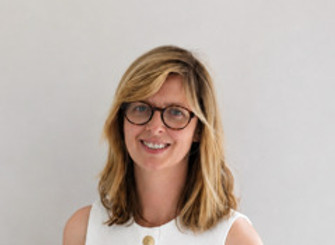
Ciara Brennan
Ciara Brennan is Principal Researcher for European Programmes at Genio, with over 15 years’ experience in disability rights and human rights research and policy. Her work focuses particularly on independent living, personal assistance, deinstitutionalisation and the implementation of the UN Convention on the Rights of Persons with Disabilities (UNCRPD). Ciara has worked extensively with disability rights organisations across Europe, including in Iceland and Sweden, and has served as an expert reviewer for United Nations guidelines on deinstitutionalisation, including in emergencies. A widely published author, she was a Marie Curie Scholar at the University of Iceland, where she completed her PhD.

Sofie De Schryver
Sofie De Schryver studied Moral Sciences at the University of Ghent and is interested in social issues as well as current affairs, philosophy, music, art and fashion. She communicates largely by directing her gaze left or right to answer yes or no questions or to select words from her communication book filled with bliss-symbols. She also has a speech computer that she uses to read out texts that she composes in advance. For the past 15 years, Sofie has been going every Saturday to the art academy, more specifically to a sculpture and spatial design studio. She obtained in both 2019 and 2026 a learning certificate with a specialization in ‘visual and audiovisual arts’. Her art allows her to express her opinions on pressing social issues.
A couple of years ago, the human rights organization GRIP asked Sofie to work for them as a researcher, and to share her search for housing on their blog. Sofie is currently still affiliated with GRIP as a volunteer.

Stephanie Dannenmann-Di Palma
Stefanie Dannenmann‑Di Palma is External Relations Officer at the United Nations Office for Disaster Risk Reduction (UNDRR), leading global engagement with the EU, the United Kingdom, Ireland and Belgium. She has worked with UNDRR since 2005 in roles spanning early warning, regional leadership and external relations. Since 2013, she has been a key driver of disability‑inclusive disaster risk reduction within the organisation. She served as UNDRR’s focal point for the UN Disability Inclusive Strategy from 2019 to 2024, a role that she handed over to UNDRR’s newly appointed global disability advisor. Stefanie holds a PhD in Geology from SUNY Albany and previously worked in disaster research and risk management at the Swiss Federal Institute for Snow and Avalanche Research and the World Institute for Disaster Risk Management in Davos, Switzerland, as well as at Swiss Reinsurance in New York, USA.

Cristian Lago Rodríguez
Cristian Lago Rodríguez is a Barcelona-based psychologist, executive and activist for the rights of people with functional diversity whose work combines professional expertise with his lived experience of spinal muscular atrophy. He advocates for independent living, personal assistance, universal accessibility and the full participation of people with functional diversity in society. Throughout his career, he has contributed to training, policy development and advisory initiatives involving public authorities, universities and civil-society organisations. In 2025, he appeared before the Spanish Congress to call for stronger care systems and reforms that guarantee dignity, autonomy and choice. In 2019, Poets &
Quants featured him among its Best & Brightest Executive MBAs in recognition of his commitment to social impact and inclusive leadership. He also has a particular interest in robotics and is a passionate FC Barcelona supporter.

Tushar Wali
Tushar Wali is the Disaster Risk Management Director at CBM Global Disability Inclusion, where he leads global work on disability-inclusive disaster risk reduction, humanitarian action, resilience, and climate adaptation. He has more than two decades of experience supporting governments, humanitarian actors, and organisations of persons with disabilities to strengthen inclusive preparedness, response, recovery, and community resilience. Tushar contributed to the development of the Humanitarian Inclusion Standards for Older People and People with Disabilities and the IASC Guidelines on Inclusion of Persons with Disabilities in Humanitarian Action. He is member of Sphere Handbook Revision Steering Committee, supporting the revision of Sphere Standards (2026 – 2028). His work focuses on promoting the rights, participation, and inclusion of persons with disabilities and other marginalised groups in crisis-affected settings, ensuring that humanitarian action strengthens independent living and community inclusion.

Paul Pasteels
My name is Paul. I am nearly 40 years old and have Down syndrome. My parents chose inclusion for me right from the start, and I am grateful to them for that. I am currently in charge of my own life. Through a supported employment program, I work 28 hours a week in the grounds keeping department of a local hospital, where I am respected.
I live independently with support from an assisted living service and can purchase additional assistance using my personal budget. It is very important to me that I am able to prove what I *can* do, rather than constantly hearing about what I *cannot* do. I decide that for myself, and my assistants support me in this. I have also learned that living independently involves trial and error. But as long as I can count on my parents and my support staff, I have always managed to make it work.
I take piano and tennis lessons. Together with one of my assistants, I prepare for meetings with 'GRIP'. She also supports me during the meetings, acting—in a sense—as my interpreter when I struggle to find the right words or am not clearly understood. I am training (with assistance) for the "Kom op tegen kanker" (Stand Up to Cancer) 1,000 km event. This is a Flemish initiative to raise funds for cancer research. I will be participating as part of a team from the hospital where I work. It kills two birds with one stone: supporting a good cause while also fostering inclusion in my own life. None of this would have been possible without my budget; I hate to think what my life would have looked like otherwise.

Gordon Rattray
Gordon Rattray is Senior Advisor for Climate and Humanitarian Action at the International Disability Alliance (IDA), with over 20 years of experience in disability inclusion. He has previously worked with the European Disability Forum and CBM and has a background in accessible adventure travel. He has a degree in biological sciences.

Zara Todd
Zara is a freelance trainer, researcher, facilitator and disability activist. She has a long history with ENIL, having co-founded the youth network, been a board member, and briefly been director.
Currently, she advises Transport Scotland on accessible travel, chairs the Edinburgh City Accessibility Commission, which looks at the built environment and how to make the city streets more accessible and is the chair of Disability Equality Scotland, a disabled people’s organisation that campaigns for a more inclusive and accessible Scotland. Zara love to travel, she and Alex often go on international adventures, last year she went to 19 countries.
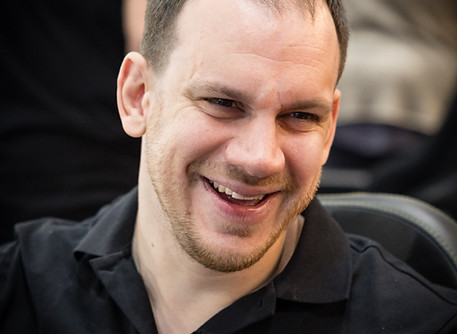
Alex Papanikolaou
Alex is a disabled founder who set out to design a user-centred powered wheelchair, pairing lived experience with industry-leading engineering to shape design decisions around powerchair users.
He has extensive experience founding and growing a company as a disabled person — specifically in product development, bringing a medical device to market, raising finance through both grants and equity, and building a team.
Alex is also an avid traveller, having visited over 75 countries and flying roughly 50 times a year for business and pleasure. He's passionate about making travel more accessible and enjoyable for disabled people. In 2025 he led Race Across Europe, a project that saw four powerchair users race from the UK to Italy using public transport, spotlighting the possibilities and fun of accessible travel.Currently, she advises Transport Scotland on accessible travel, chairs the Edinburgh City Accessibility Commission, which looks at the built environment and how to make the city streets more accessible and is the chair of Disability Equality Scotland, a disabled people’s organisation that campaigns for a more inclusive and accessible Scotland. Zara love to travel, she and Alex often go on international adventures, last year she went to 19 countries.
Maxwell Thurston
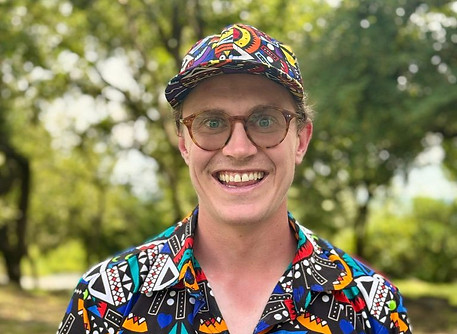
Maxwell Thurston is an American activist and PhD researcher studying the potential of wearable robotic exoskeletons to enhance mobility and autonomy for children and youth with Cerebral Palsy. Max is also an avid traveler and adventurer, and in the summer of 2024 he rode his bicycle from Helsinki, Finland to Lisbon, Portugal, riding more than 8,000 km over a 6-month period with 110 days of cycling across Europe. Max partnered with ENIL for his ride, and used the adventure to raise awareness about disability rights and independent living as well as funds to support ENIL’s work. Throughout the journey he met with various independent living organizations across Europe, learning about the structures, successes, and challenges of the independent living movement in different countries and contexts. During the ride, he also attended the Paralympic games in Paris, where he developed a strong passion for adaptive and inclusive sports. Inspired by his experience at the Paralympics and driven by his background as a sport scientist, Max volunteered for 3-months in the summer of 2025 with the organization Ability Sports Africa in northern Uganda, using adaptive and inclusive sports to promote health, wellbeing, and independence, as well as address stigma and break down barriers disabled people face in sub-Saharan Africa. Max is now back in Helsinki Finland completing his PhD, and hopes to participate in and lead projects that combine scientific research, activism, and sport to work towards a more inclusive and just society.